Showing posts with label full body health checkups. Show all posts

4 Reasons Why It's Better to Spend on Breast Cancer Prevention


 Breast cancer is one of the most fatal diseases in women. As per a WHO report, 65% cases in India are diagnosed only when they reach stage III or IV - an advanced stage of the disease. Cancers can only be cured successfully if they are detected early. Early detection of breast cancer is the key to treatment, cure, quality of life, and survival - and the key to early detection is 'preventive health checkup'.


Some people think health checkups are costly or not worth the cost. But they are actually cheaper than finding treatment for cancer that has advanced. Health checkup is like getting servicing your body. Here are four reasons why spending money on preventing breast cancer makes more sense.


  1. It gives you peace of mind along with actionable information

Your checkup reports your current status of health. Based on that you can be at peace that your health is perfect, or you could take corrective lifestyle actions for preventing the risks your reports indicated.


  1. It saves your out-of-pocket or unexpected expenditures 

Cost of health checkups are way lower than treatment, especially when the stage of cancer is at an advanced stage. Moreover, early detection through checkups gives you an edge - survival.

Have a look at the comparison of modalities of treatment, survival rate and cost of treatment in various stages of breast cancer.
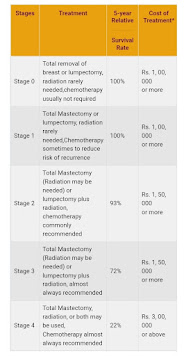

  1. It avoids stress and mental trauma for the sufferer and their families

Regular health screenings can save the patient and their family from trauma, pain, mental agony and financial setback - if you compare, you'll see that the cost of prevention is almost negligible.

Breast cancer at Stage 1 is definitely curable; at Stage 2 it is highly manageable. However, if it reaches Stage 3 or 4, it is very difficult to treat, and survival reduces to a few years.


  1. It is an investment for your overall health

Health checkups are your tool in prevention. Ideally, you should go for routine full body health checkups at least once a year. It helps you in understanding the performance and functioning of the organs, hormones and metabolism in your body, any abnormalities or deficiencies that might be developing, and the risks that you might have towards certain diseases. As your lifestyle affects your health over time, you should be regular with your screenings. You might be able to cure deficiencies and disease risks including breast cancer with minor lifestyle improvements. 


Stay a step ahead of breast cancer, book your cancer screening tests like sono-mammography and more in this comprehensive health checkup package.

What are Some Signs To Tell When The Aortic Valve of The Heart is Not Functioning Well?


Heart valve issues are related to many different conditions that obstruct the functioning of one or more of the valves in the heart and hinders proper circulation. If not treated in time, heart valve dysfunction can impact the quality of life and be fatal. Identifying a malfunctioning heart valve can help in treatment and restoration of their normal function and healthy life.

The function of heart valves

There are four valves in the heart - mitral, tricuspid, aortic and pulmonic. They ensure the blood flow in only one direction uniformly through your heart. The valves are made of flaps of tissue that open so that the blood can move forward through the heart during the first half of the heartbeat. During the other half of the heartbeat, they close to prevent blood from flowing back. These tissue flaps are called leaflets. In the mitral and tricuspid valves, there are fibrous strands of tissue that connect them to the papillary muscles inside the walls of the ventricles. They keep the leaflets sturdy against any wrong flow of blood.


Heart valve disease

Heart valve disease happens when the valves of your heart do not function correctly. Some birth defects, Rheumatic fever, over time degeneration, and infections can cause heart valve disease. 


Symptoms of heart valve disease

When the heart valves begin to function improperly, the heart needs to work harder to compensate for the decreased blood flow. With passing time, the valves malfunctioning progress and symptoms begin to show. Some of the signs are mentioned below:

  • Discomfort in the chest

  • Palpitations 

  • Shortness of breath

  • Swelling of the ankles, feet or abdomen (Edema)

  • Dizziness

  • Weakness 

  • Unexplained weight gain


How is valve disease diagnosed?

Regular physical examinations are essential to find out about fluid in the lungs, enlargement of the heart, and heart murmur. Heart valve issues can be diagnosed by several medical tests that are included in the full body health checkups:

  • Echocardiogram: it is the ultrasound of the heart where a moving image of the valves and chambers are displayed using sound waves 

  • Angiogram: it is the x-ray of the coronary arteries, heart’s chambers and valves done by dye injected into a catheter in your limbs

  • Electrocardiogram: the electrical activity of the heart is recorded in graphs using small electrode patches 

Depending on your current health and any existing health conditions, your physician might suggest some more tests like stress echocardiogram, MRI. Your doctor can monitor the progress of your valve issues and help you in making decisions about prevention or treatment plans. Check your heart valves now with a heart health checkup.


10 Habits You Need In Your Life To Become Healthy

A healthy body and life can be built with small lifestyle modifications each day - change your habits little by little so that they can add up to give you a healthier life. Remember, Rome wasn’t built in a day!

Why is a shift in lifestyle essential for a healthy life?

Your daily lifestyle influences your body’s functioning and health. Everything you do has an impact on your body. So, it is essential to start making those shifts if you want a healthier and fitter life. Your preventive and health choices can be your defiance against various health conditions. Read to know what you can do to empower yourself with a healthy life. 


  1. Eat healthy: A well balanced nutritious diet is most important for achieving optimal state of health. Opt for nutrient rich foods daily - add fresh fruits, seasonal vegetables, and whole grains on your food plate. Cut out processed meats and food, limit your alcohol and sugar consumption, and quit smoking.


  1. Drink water: Being hydrated is essential for your body - all the cells, tissues and organs in your body need water to function well. Your water needs depend on various individual factors. 


  1. Go for a daily walk: The habit of walking post your meals has many benefits. It can help you in managing your blood sugar levels.


  1. Exercise for 20 minutes per day, weekly: Regular can increase your cognitive functioning, along with managing your body weight, and keeping you fit. 


  1. Boost your mind: There are various ways to keep your mind healthy. Find out what gives you happiness - follow it as your hobby for a stronger mind. 


  1. Sleep well: Sleep is an intrinsic part of good health. Sleep helps the body rest, regenerate, and promotes physiological and emotional health.


  1. Manage your stress: Long term stress can take a toll on your physical and mental health. It interferes with the immune system and affects the body's health and emotional wellness. Know the ways that help you relieve stress, they are mostly individual to everyone.

  2. Laugh a lot: Daily dose of laughter helps in boosting your immune system and reducing the hormones that cause stress. 


  1. Be grateful: Note down the things that you are thankful for, and offer gratitude for them. Being grateful is powerful enough to create a rush of endorphins that can beat stress.


  1.  Get your full body screened: Early detection is crucial to prevent or treat chronic lifestyle health conditions. Regular full body health checkups are therefore important for preventing diseases and catching them at an early stage when it is still treatable and curable. Know more about preventive health checkups.

Does Diabetes Affect Joints And Bone? How Can Joint Problems Be Prevented?

Diabetes is a chronic health condition resulting in malfunctioning in production of insulin and blood glucose. Both type 1 and type 2 diabetes are associated with multiple bone and joint issues. Having diabetes increases your risk for such problems. Diabetes along with some specific conditions like nerve damage and obesity tends to make your body vulnerable to such disorders.


What are the various bone and joint disorders connected to diabetes

  • Neuropathic arthropathy: deterioration of a joint  because of nerve damage, mostly affects the feet. Numbness and tingling in the affected joints are the signs to watch out for. The joints may look deformed but may not be painful.

  • Osteoporosis: weakness of bones that makes them prone to fracture. Unfortunately, osteoporosis rarely shows symptoms in its early stages. 

  • Osteoarthritis: caused by the disintegration of joint cartilages. Being overweight adds to the risk of developing osteoarthritis. It may cause pain, stiffness and swelling in the joints.

  • Musculoskeletal problems: joint damage leading to a limited range of movement. Conditions like carpal tunnel syndrome, and trigger fingers might develop along with thickness of skin on the fingers - all of these causing a decreased joint mobility.


Prevention, treatment and management of bone and joint disorders connected to diabetes

  • First and foremost is the management of blood glucose levels in your body

  • Maintain a healthy weight

  • Include some light weight training exercises, and cardio

  • Eat a balanced diet that is rich in calcium and vitamin D; consume all supplements prescribed by your physician

  • Get the treatment, physical therapy and medication provided by your physician

  • Acupuncture and massage can sometimes be helpful for pain management, consult your doctor for a viable pain relief process

  • Keeping a check on your bone mass density is important to understand any further damages

  • Go for your regular full body health checkups to assess the functioning of various organs and your body’s health, and for early detection of diseases. Book your checkup package now.

How Regular Health Checkup Helps To Prevent And Treatment Of Kidney Disease?

Kidney disease is counted as an important health consideration because it goes undetected until it reaches advanced stages where it becomes life threatening. The only way to survive at that time is either a dialysis or transplant - both are quite complicated. Hence the only way is to detect the kidney disease early through regular full body health checkups. They help you in understanding your risk, preventive methods, and proper treatment planning with your doctor.


Role of kidneys in your body:

  • They are responsible for the filtration of toxics and wastes from the bloodstream

  • They help in regulating the fluid level in your body

  • They regulate the blood pressure by releasing a hormone 

  • They activate vitamin D that is needed for maintaining the health of your bones

  • They  balance the sodium, phosphorus, and potassium level in your blood 


Kidney disease can put you at risk for:

  • Cardiovascular diseases

  • Hypertension

  • Fragile bones

  • Kidney failure 

  • Anemia 

  • Loss of life


Having a personal or family history of these diseases can increase your risk of kidney disease:

  • Obesity

  • Diabetes 

  • Cardiovascular diseases

  • Hypertension

  • Kidney failure

How to prevent kidney disease?

Keep a check on the signs and symptoms: 

  • Fatigue

  • Unexplained weakness

  • Pain while urination

  • Foamy, dark urine

  • Puffy eyes

  • Swollen body parts

Regular full body health checkups:

  • As the early stages of kidney disease show no symptoms, detection through regular health checkups is critical. 

  • If you just acknowledge the disease when symptoms appear, it may have advanced. At such stages, treatment is quite complicated and the chances of saving life is less.

  • You should make sure you get your health assessed annually if you have any of the above mentioned risk factors.


Follow a healthy lifestyle for preventing kidney disease:

  • Maintain your blood pressure, cholesterol and sugar at normal levels

  • Reduce salt intake in your diet

  • Exercise on a regular basis

  • Manage a healthy body weight

  • Consume a balanced diet

  • Quit smoking and alcohol

  • Drink enough water


Need to check your kidney health? Find out the best checkup facility in your city near you.


Follow These 6 Simple Ways For Diabetes Remission


DIABETES

Diabetes is of 2 types:

Type 1 diabetes: an autoimmune disease that develops when the body acts against the cells in the pancreas that produce insulin. 

Type 2 diabetes: develops a decreased sensitivity to insulin - the body doesn’t make as much insulin as needed. 

Type 2 diabetes is the more common of the two.


Can diabetes be cured?

Diabetes is incurable but it can be managed to live a healthy quality of life. This is commonly known as remission - the body doesn’t show the signs of diabetes but it is still present.


Achieve diabetes remission with these simple lifestyle modifications:

  1. Consume healthy meals: What you consume has an effect on your blood sugar. Limit your portions and eat more fruits, vegetables, whole grains, lean meats and nonfat dairy. Avoid foods that have high sugar, carbohydrate, and fat.

  2. Exercise daily: Ensure you add 30 minutes of simple forms of exercises in your daily routine such as walking, biking, etc. Being active controls your diabetes by lowering your blood sugar. 

  3. Quit smoking if you currently are in habit: Having diabetes increases your risk for other critical health conditions like heart disease, stroke, kidney & eye diseases, and foot problems. Smoking adds to your already existing risk of developing these other diseases.

  4. Keep your alcohol consumption in control: Alcohol has the tendency to increase or decrease your blood sugar levels. Some of the alcoholic drinks are also high in carbs that can increase your blood sugar.

  5. Try to lower your stress: Stress increases your blood sugar levels. Find stress relieving activities like developing hobbies, deep breathing, yoga, or that helps you to relax.

  6. Be regular with your full body health checkups: As mentioned above, diabetes increases your risks for other lifestyle diseases like stroke and heart disease. It is, therefore, of utmost importance that you get your complete body checkups done at regular intervals. Your reports give you the current picture of your health and that helps you in taking appropriate actions for the diseases that might be developing in your body. 

Know the best health checkup package near you that includes free physician consultation pre & post checkup that helps you understand your health and take further actions for prevention.


Popular Posts